


I was holding a glass of apple juice, standing in a dark, loud room, surrounded by some of the most powerful people in AI.
Jensen Huang was somewhere nearby. The invitation said “private party”. GTC Paris, VivaTech 2025. I’d somehow made the list.
And all I could think was: what the hell am I doing here?
It wasn’t excitement. It wasn’t gratitude. It was something closer to dissociation - like I wasn’t Max anymore, just a passenger in my meatsuit, watching this scene unfold and waiting for someone to tap me on the shoulder and say there’d been a mistake.
I’m 45 years old. I’ve been building companies for over a decade. I’ve shipped products, raised money, hired teams, failed spectacularly, and come back to try again. By most measures, I’ve earned my place in rooms like this.
And yet.
That’s the thing about being a greybeard in startup land. Experience doesn’t cure impostor syndrome. It just changes the flavor.

The greybeard reality
“Greybeard” is an old term from hacker culture - the experienced one, the person who’s seen the cycles come and go, who remembers when the current hot thing was the last hot thing under a different name. It’s not about actual grey hair, though I’ve got some of that too. It’s about having survived long enough to recognize patterns.
The startup world has a complicated relationship with experience.
There was an era - the Zuckerberg era - when “young people are just smarter” was said out loud, and investors pattern-matched hoodies and 23-year-olds to billion-dollar outcomes. That’s softened somewhat, but the bias remains. Walk into most startup events and count the grey hair. You won’t need many fingers.
I’m 45, building AI companies, moving toward Silicon Valley, competing in a space where some founders weren’t born when I wrote my first lines of code.
My co-founders are in their 40s and 50s. Michal. Casey. Artur. We’re not the young hungry wolves. We’re the ones who’ve been through the woods before and know where the traps are.
Some people see that as a disadvantage. I’m starting to think it’s the opposite.

What experience takes away
Let me be honest about the costs first. If I only talked about the advantages, you’d know I was selling something.
The body keeps score.
I just finished an 8-day crunch. December 26th through January 5th. Three projects colliding: Omea Vertical Slice, a B2B feature delivery, Migam demo prep. 16.5 hours a day average. Eight sunrises seen from the wrong side.
At 25, I would’ve bounced back in a weekend. At 45, I know I’ll need weeks. My body isn’t angry with me - it’s disappointed. There’s a debt that compounds, and recovery takes longer to pay it down.
The 22-year-old founder can pull all-nighters like they’re free. They’re not free for anyone, but the invoice arrives later when you’re young. At 45, it arrives immediately, with interest.
The curse of knowing too much.
Pattern recognition is a superpower until it becomes a cage.
I’ve seen companies fail. I’ve watched promising tech get crushed by better-funded competitors. I’ve experienced the slow-motion collapse of something I built - watching 20 people and years of work dissolve because we were too slow, in the wrong country, too focused on quality while the market moved on.
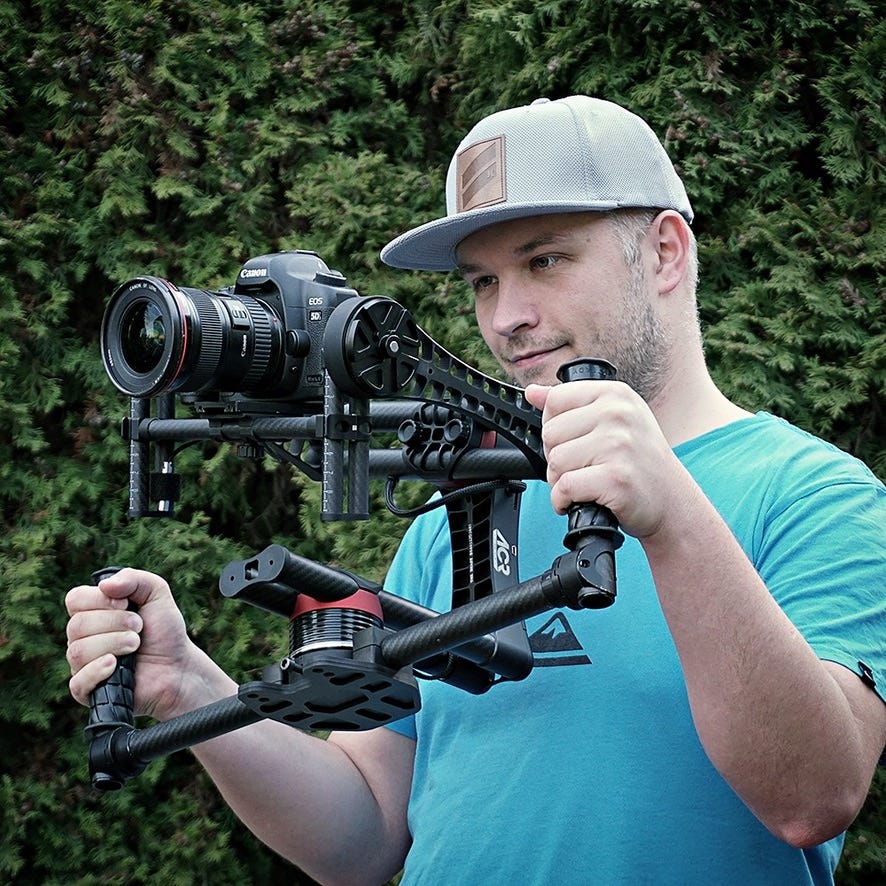
ACR. My camera robotics company. 2013 to 2019. That wound is still fresh. I think it always will be.
When you’ve lived through that, you see failure modes everywhere. Sometimes that’s wisdom. Sometimes it’s just fear wearing wisdom’s clothes. The balance between “I know how this ends” and “I should try anyway” gets harder to find.
The paralysis of probability.
Young founders move fast and break things without thinking too hard about what might break. They have the luxury of not knowing all the ways something can go wrong.
I know. I’ve lived a lot of them.
That knowledge can slow you down. The thoroughness that experience brings can become overthinking. The caution that wisdom provides can become hesitation.
Sometimes ignorance really is bliss, and the young founder who doesn’t know the cliff is there will occasionally make the jump that the experienced one won’t attempt.
What experience gives you
Now the other side. The part that makes the grey hair worth it.
Pattern recognition (the good kind).
I’ve seen hype cycles. I remember when everything was going to be disrupted by blockchain, by VR, by mobile, by the cloud, by social, by AI. Some of those disruptions were real. Most were noise dressed up as signal.
When you’ve watched enough cycles, you develop a filter. You can see what’s actually new versus what’s a rebrand of something that failed five years ago. You can smell the difference between genuine innovation and venture-backed marketing.
In AI right now, this matters enormously. So much noise. So many pitches that are “ChatGPT wrapper plus funding round”. The ability to see through that - to identify what’s actually going to matter in five years - that comes from having watched the previous waves.
Relationships compound.
Twenty years of building things means twenty years of connections. People who’ve watched you operate, fail, come back, and try again. Trust that can’t be speedrun.
When I call someone I’ve worked with for a decade, they take the call. When a young founder cold emails them, they might not. That’s not fair, but it’s real. Relationships are infrastructure, and infrastructure takes time to build.
Emotional regulation.
The panic that would’ve destroyed me at 25 doesn’t touch me at 45.
Not because I’ve become numb - I still feel the fear, the doubt, the 3 AM certainty that everything is about to collapse. But I’ve survived enough of those nights to know they pass. I’ve been through worse. I know I’ll be through worse again. And I’m still here.
Investors can smell desperation. They can also smell calm. Experience gives you the ability to be terrified on the inside while presenting composed on the outside. That’s not dishonesty - it’s regulation. It’s knowing that your fear isn’t useful information for the room.
Knowing yourself.
At 25, I was fighting my own nature constantly. Trying to work the way I thought I was supposed to work. Failing, blaming myself, trying harder in the same broken way.
At 45, I finally understand how I work. ADHD wasn’t a diagnosis I had most of my life - I just thought I was broken in ways I couldn’t fix. Getting that understanding, finding the right support, learning to use my brain instead of fighting it - that turned a lifetime of struggle into something closer to a superpower.
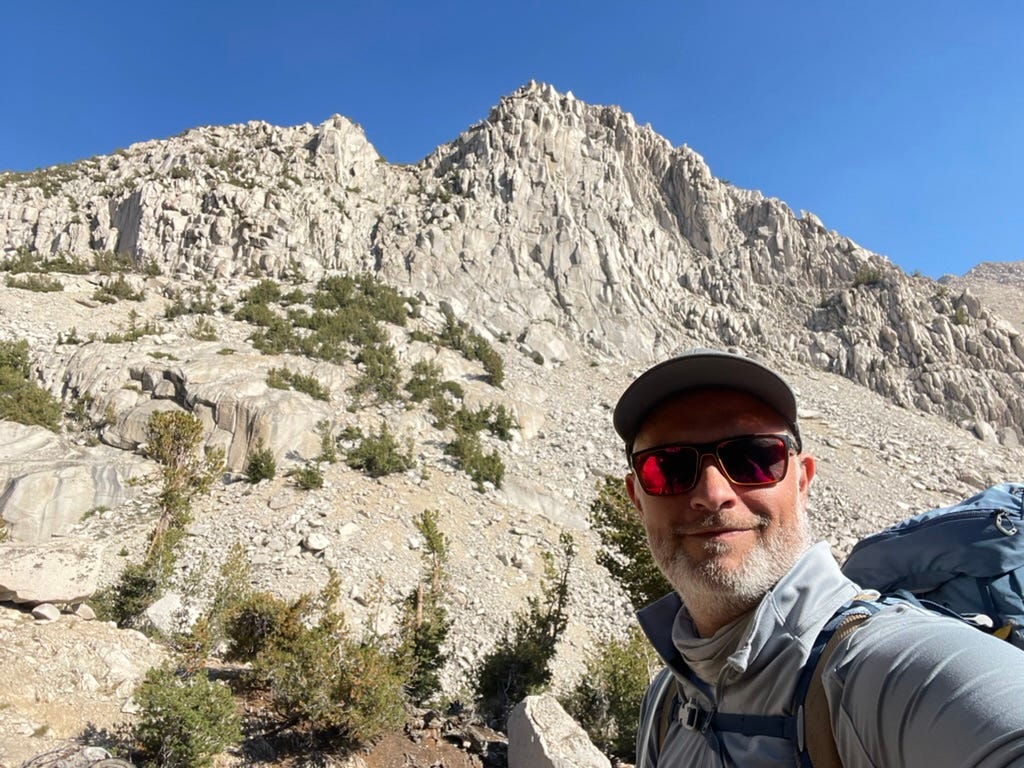
I know when to push and when to rest. I know that my best ideas come not in front of a keyboard but on a mountain trail or - I’m not making this up - while watching an avalanche from a backcountry toilet in King’s Canyon. That’s where I figured out how to implement multiplayer in Omea. Your brain keeps working even when you’re not looking at the screen. Especially when you’re not looking at the screen.
The generalist advantage.
Here’s something I’ve accepted: I’m not a great programmer.
I’m a mix of stubborn and lazy. My code works but it’s not elegant. I know people who are smarter and write better software.
But here’s what I bring: I’ve worked on movie sets and understand how storytelling works from the production side. I’ve built robots and understand physical systems. I’ve trained AI models and understand the math. I’ve run teams and understand people. I’ve failed at sales and understand markets.
The job of a founder - especially a technical founder - isn’t to be the best at any one thing. It’s to understand enough about everything to hire people better than you and know whether they’re doing good work.
I can sit with devops, frontend, backend, ML engineers, game designers, and narrative writers - and I can follow what they’re doing well enough to help. That generalist range comes from decades of being curious about everything. You can’t speedrun that either.
The impostor syndrome paradox
Here’s what nobody told me: impostor syndrome doesn’t go away with experience. It evolves.
At 25, impostor syndrome said: “You don’t know enough”.
The solution seemed obvious - learn more, work harder, earn your place.
At 45, impostor syndrome says something different: “You know too much about how hard this is”.
I’m not scared of the unknown anymore. I’ve faced enough unknowns. I’m scared of the known. I’ve seen talented people fail. I’ve seen great products die. I’ve seen founders who did everything right still lose.
The young founder has the comfort of ignorance - maybe THIS time it’ll be different, maybe I’M the exception.
I know the base rates. I know how many startups fail. I know how many AI companies are going to be nothing in five years. And I’m building anyway, with clear eyes about the odds.
That’s a different kind of impostor syndrome. Not “I don’t belong here because I’m not good enough” but “I know exactly what this takes and I’m not sure I have it”.
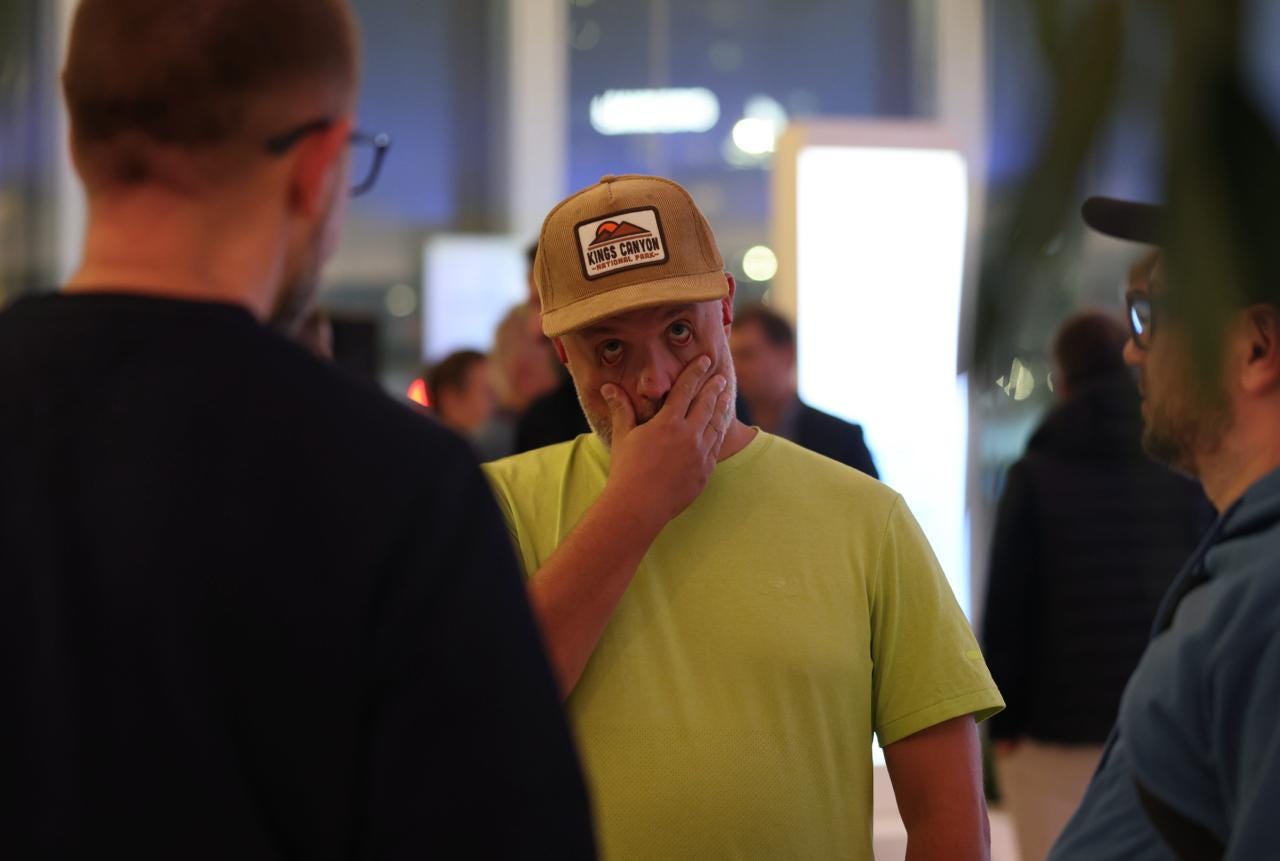
Standing in that dark room in Paris, holding my apple juice, watching Jensen Huang work the crowd - the voice in my head wasn’t “you don’t deserve this”. It was “you know how unlikely this is. You know how many things had to go right. You know it could all disappear tomorrow”.
Experience doesn’t silence that voice. It just teaches you to build anyway.
The team that finally works
One thing I haven’t mentioned yet: I didn’t get here alone.
For most of my career, I had the wrong co-founders. ACR collapsed partly because of market forces, partly because of geography, but also partly because the team wasn’t right. When trust breaks down at the top, everything downstream suffers.
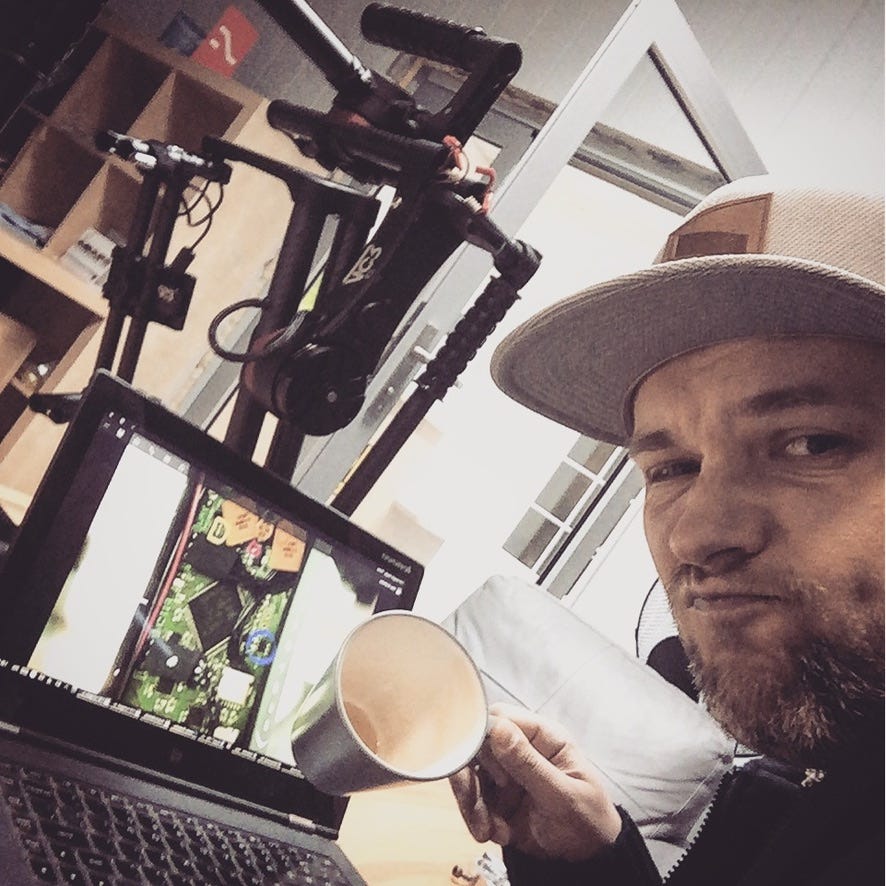
Starting around 2019, something changed. I found my people.
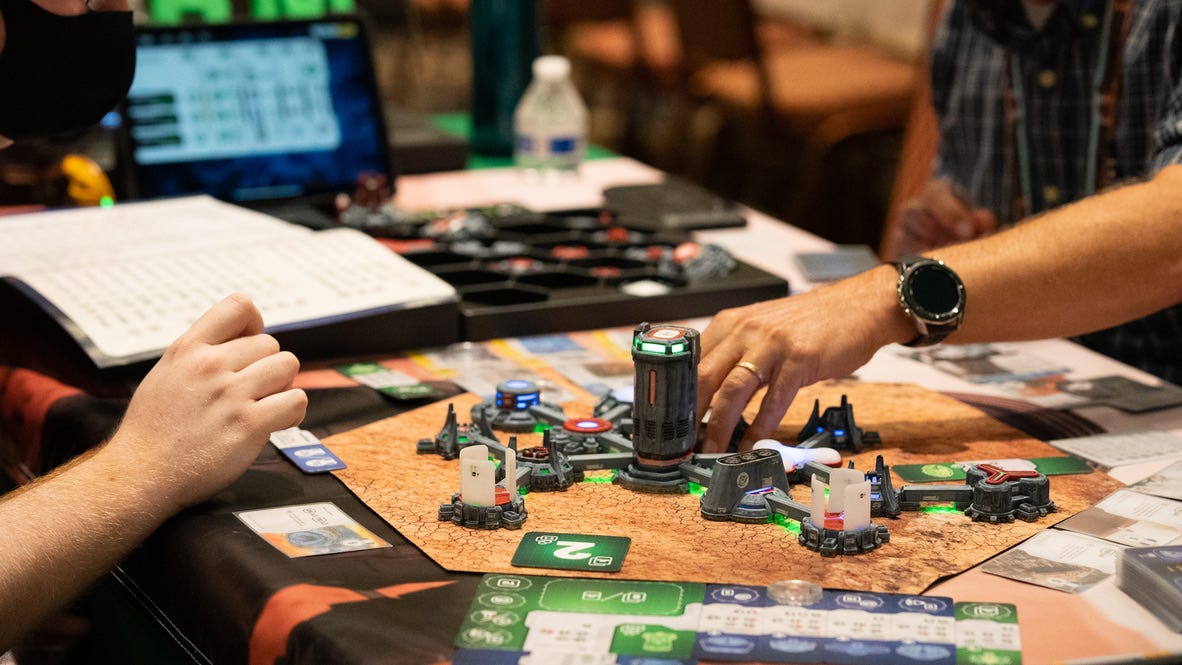
Three Headed Monster - THM - was a game publisher where we built Beyond Humanity: Colonies. The most complicated board game ever made, in terms of components. IoT electronics on the table. RFID-powered playing cards. Companion app. Software everywhere.
It should have been impossible. But we did it, because the team worked.
Casey McBeath. Przemek Kuśmierek. Michał Pena. Artur Kurasiński. These are people who don’t put a knife in your back. Who show up when it’s hard. Who match intensity when intensity is needed and tell you to take a walk when you’re running on fumes.
Having co-founders in their 40s and 50s is part of the greybeard advantage. We’ve all been burned before. We’ve all seen partnerships fail. We know what we’re looking for now, and we know the warning signs.
A team of greybeards isn’t slower than a team of young founders. It’s more deliberate. Less drama, more execution. Fewer late-night fights about equity and more late-night fights about product. The right problems to have.
What I’ve learned to protect
A few things that took decades to figure out:
Supportive partner.
I haven’t been alone for most of my life. That’s not an accident - it’s a choice I made and keep making. My wife has been through ACR, through THM, through Migam and Omea. She’s the one who says “we’re going on a walk” when I’ve been staring at code for 16 hours and my body is screaming.
You can’t do this alone. Or you can, but you’ll break in ways that are hard to fix.
Hobbies make you sane.
I wouldn’t be building Omea if I weren’t a gamer. PC games, board games, pen-and-paper RPGs since I was young. I understand WHY we’re building what we’re building because I’ve spent decades as a player. That’s not frivolous - it’s foundational.
Your hobbies make you interesting. They also make you good at things you couldn’t have predicted. My understanding of narrative structure comes from being a Game Master. My understanding of player psychology comes from watching people interact with systems for fun. Work and life aren’t separate - they feed each other.
Vacations aren’t optional.
I started taking real vacations around 2022. Workations at first, then actual unplugged time. Hiking in places with no cell reception. Letting my brain work on problems without forcing it.
The multiplayer architecture for Omea came to me in King’s Canyon, watching an avalanche rumble down a mountainside while I was very much not at my desk. Your brain doesn’t stop working when you leave the office. Sometimes it works better.
The cult of hustle says vacations are for the weak. Experience says vacations are where the breakthroughs hide.

The actual advantage
So what’s the real greybeard edge?
Survival itself.
I’m still here. After ACR, after the failures I haven’t written about, after the moments when quitting would’ve been easier - I’m still building.
That’s not nothing. That’s the credential that can’t be faked.
Every failure taught me something the 25-year-old hasn’t learned yet. Not because they’re not smart - they might be smarter. But because some lessons only come from living through the thing. You can read about failure. You can study case studies. But you don’t KNOW it until you’ve watched something you built turn to dust.
The combination play.
The winning formula isn’t old versus young. It’s old AND young together.
Surround yourself with people who have what you lack. Hire the 28-year-old who codes faster than you ever did. Work with the 35-year-old who understands TikTok marketing in ways you never will. Be the greybeard for others while still finding your own mentors.
GTC San Jose 2025 was a revelation. Being among the craziest of the crazy, surrounded by people building things that will change the world. Some of them were 25. Some of them were 55. The energy wasn’t about age - it was about ambition matched with competence.
I want to be part of that community. Not as the old guy who remembers when, but as someone still building, still shipping, still in the game.
The invitation
To other greybeards out there, feeling like maybe they missed their window:
You didn’t. The window is still open. Maybe it’s open wider than it was when you were 25, because now you actually know what you’re doing.
The patterns you’ve learned. The failures you’ve survived. The calm you’ve earned through exposure to chaos. The relationships you’ve built over decades. The self-knowledge that only comes from years of getting it wrong.
These are assets. Real ones. The 25-year-old has energy. You have wisdom. Both are needed. The world is not short on young founders with big ideas. It might be short on experienced builders who’ve seen cycles and know how to survive them.
To the young founders reading this:
Find your greybeards. Not to tell you what to do - to tell you what they wish they’d known. To pattern-match the warning signs you don’t recognize yet. To be calm when you’re panicking because they’ve been through the panic before.
The best teams I’ve seen combine young energy with old wisdom. Neither is sufficient alone.
Some days the impostor syndrome still wins. Some days my body reminds me that it’s not 25 anymore and the invoices from past crunches are still coming due. Some days I stand in rooms full of younger, faster, maybe smarter founders and wonder what I’m doing there.
But then I remember: I’ve survived things they haven’t faced yet. I’ve learned lessons they’ll have to learn the hard way. I’m still building, still shipping, still in the arena.
The apple juice in my hand at that Paris party wasn’t champagne. That’s fine. I was there anyway. Passenger in my meatsuit or not, I was in the room.
That’s the greybeard advantage. Not certainty. Not confidence. Just survival, compounded over decades, plus the stubbornness to keep going.
Less talking, more building. See you next week.
Max
PS. To every founder over 40 feeling like they’re too late: you’re not. You’re just starting with better equipment. The scars are features, not bugs.
PS.2 Next week: (probably about) ADHD and the founder brain. How something I fought my whole life became (mostly) a superpower. Fair warning - that one’s going to get personal.