


What if I told you there’s a story pattern so deeply embedded in human consciousness that hearing it triggers the release of oxytocin - the same neurochemical that bonds mothers to their newborns?
A pattern so fundamental that researchers at Princeton discovered something remarkable: when you listen to someone telling a story that follows this structure, your brain waves literally synchronize with the storyteller’s. Your neurons fire in the same patterns as theirs. You get on the same wavelength - not metaphorically, but measurably, observably, neurologically.
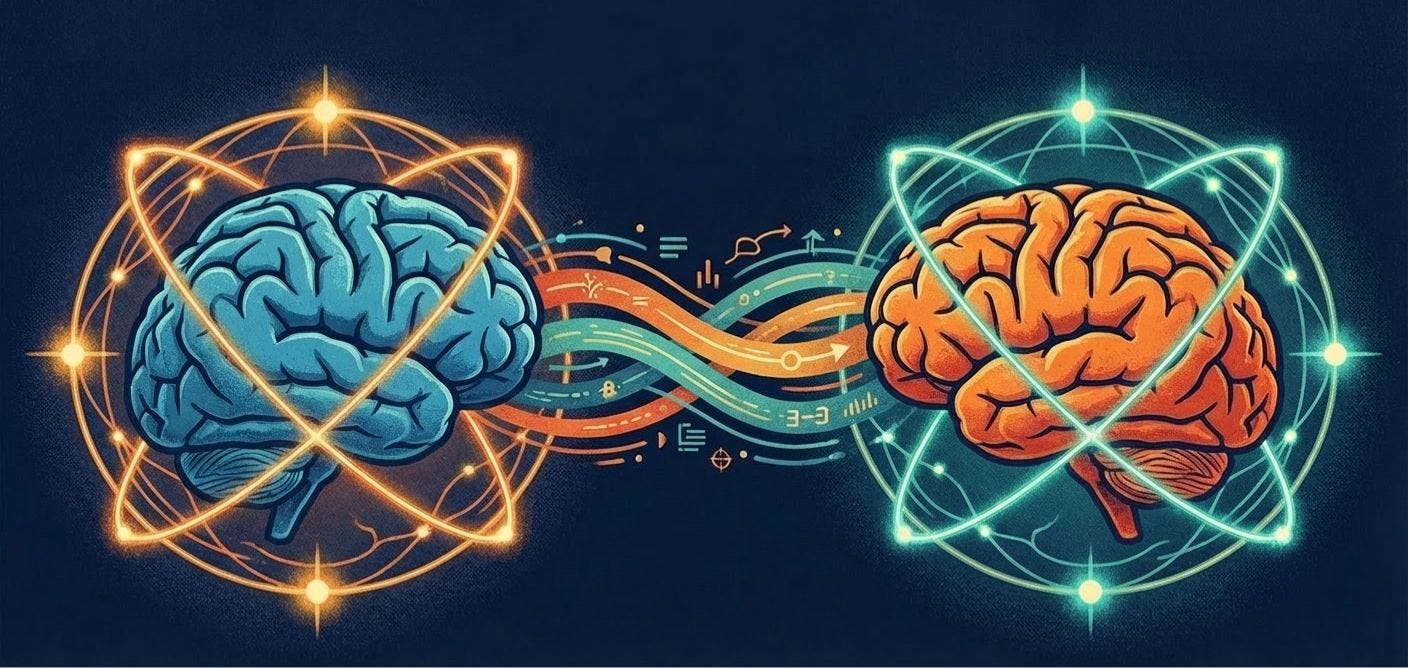
This isn’t mysticism. This isn’t creative writing advice from a blog post. This is peer-reviewed neuroscience, and it explains something that Joseph Campbell discovered seventy-five years ago by studying myths from cultures that had never had contact with each other.
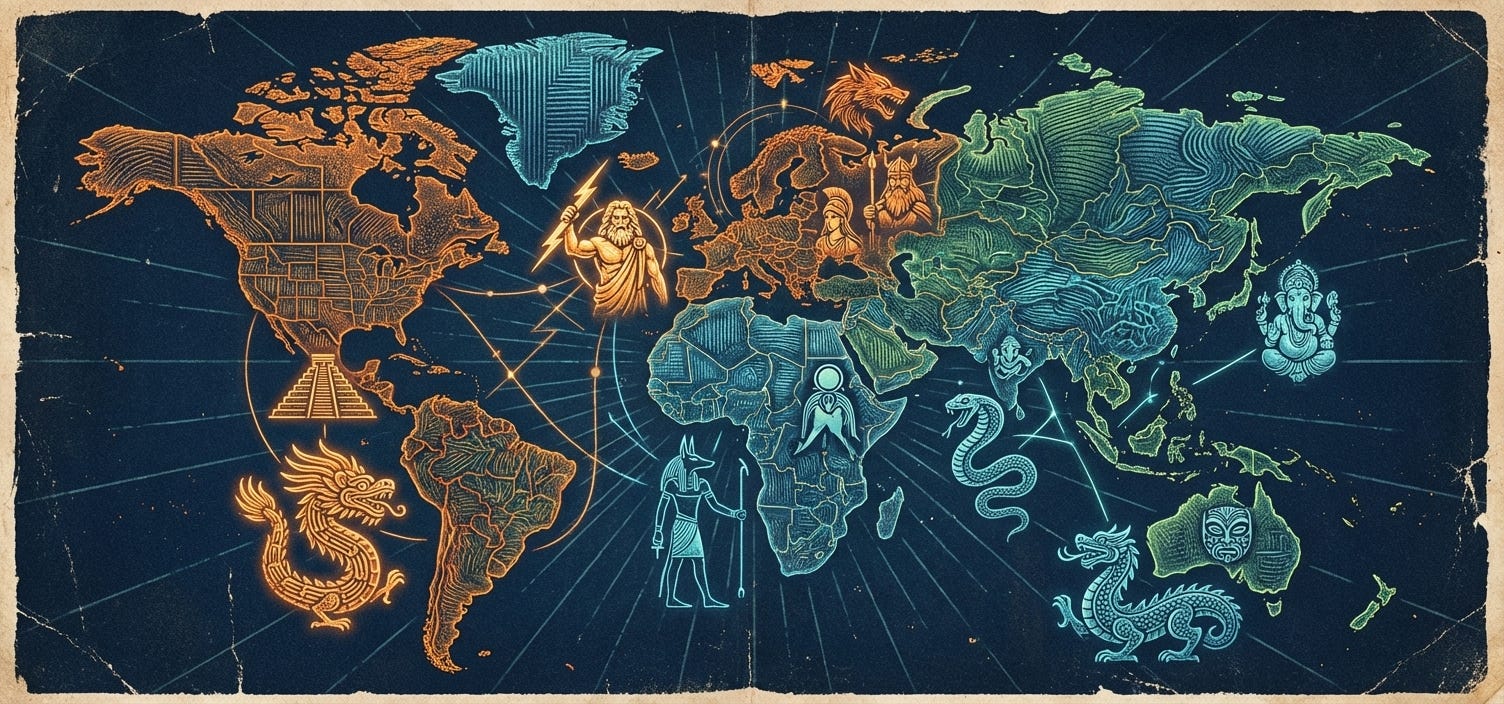
Every culture on Earth, separated by oceans and millennia, tells variations of the same story.
The Greeks told it about Odysseus. The Norse told it about Odin. The Hindus told it about Arjuna. Native American tribes told it about countless heroes. African griots passed it down through generations. Aboriginal Australians encoded it in their Dreamtime stories. The Japanese told it. The Celts told it. The Mesopotamians carved it into clay tablets five thousand years ago.
The same story. The same structure. The same emotional beats.
Campbell called it the monomyth - the one story. We know it better as the Hero’s Journey.
And here’s why this matters to you, reading this newsletter about building startups and making impossible things happen: this pattern isn’t just for novelists and screenwriters. It’s the hidden architecture behind every pitch that makes investors lean forward. It’s the structure that turns a product demo into an emotional experience. It’s the difference between a company that people use and a company that people believe in.
It’s also the foundation of everything we’re building at Omea - an AI that tells stories you actually want to live inside. And the reason that works isn’t because we’re clever engineers. It’s because we’re building on fifty thousand years of human narrative evolution.
I first discovered Campbell’s work twenty-five years ago, when I was trying to become a better Game Master for pen-and-paper RPGs. I wanted to understand why some adventures felt epic and others felt flat, why some sessions left players talking for weeks and others were forgotten by the next morning. The Hero’s Journey was the answer I didn’t know I was looking for.
A quarter century later, I’m still using it. Every day. In how we design narrative AI, in how we pitch to investors, in how I think about my own journey as a founder.
Let me show you what I mean.
The man who found the One Story
Joseph Campbell was a professor of literature at Sarah Lawrence College who spent his career doing something unusual: instead of studying how myths from different cultures differed, he studied how they were the same.
This was counterintuitive. The academic tradition was to emphasize differences - to show how Greek mythology was distinctly Greek, how Hindu legends reflected specifically Hindu worldviews, how Native American stories emerged from uniquely Native American experiences. Campbell went the other direction. He asked: what if all these stories, from all these places, share something fundamental?
What he found changed everything we understand about storytelling.
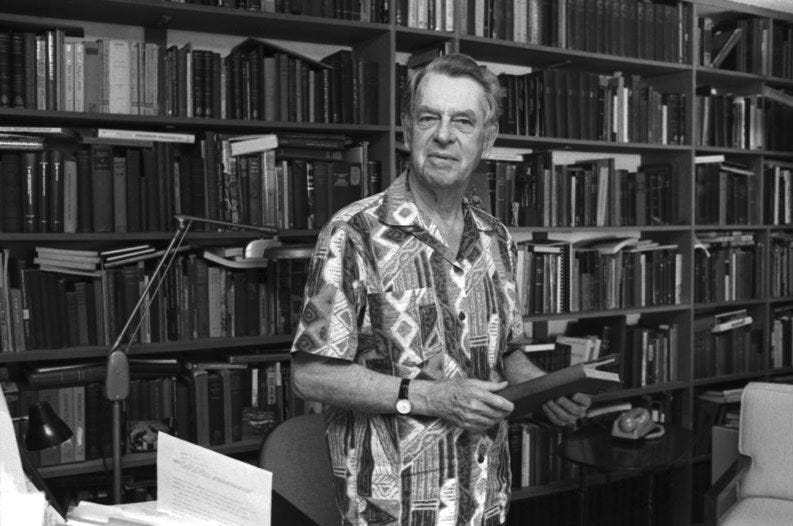
In 1949, Campbell published “The hero with a thousand faces”, a book that would influence generations of writers, filmmakers, and storytellers. In it, he laid out a pattern that appeared across every mythology he studied - a universal story structure he called the monomyth.
Campbell summarized it like this:
“A hero ventures forth from the world of common day into a region of supernatural wonder: fabulous forces are there encountered and a decisive victory is won: the hero comes back from this mysterious adventure with the power to bestow boons on his fellow man.”
Departure. Initiation. Return.
That’s the skeleton. The hero leaves home, faces trials, and comes back transformed. Simple enough. But Campbell went deeper. He identified seventeen specific stages within this structure, each appearing across cultures that had never communicated with each other.
The Greek hero Odysseus and the Babylonian hero Gilgamesh - separated by centuries and hundreds of miles - follow the same narrative beats. The Buddha’s journey to enlightenment mirrors the structure of European fairy tales. African trickster gods undergo the same transformations as Norse warriors.
This wasn’t a coincidence. It couldn’t be. These cultures had no contact, no shared written tradition, no way to copy each other’s stories. The pattern had to come from somewhere else.
Campbell, influenced by the psychologist Carl Jung, believed the pattern emerged from something universal in human psychology - what Jung called the collective unconscious. The Hero’s Journey, in this view, isn’t a template that storytellers choose to use. It’s a pattern that reflects something fundamental about how human beings experience growth, challenge, and transformation.
But Campbell was working in 1949. He didn’t have fMRI machines. He didn’t have the tools to look inside the brain and see what actually happens when we hear these stories.
We do now.
Your brain on story
In the decades since Campbell’s work, neuroscientists have been able to study what happens in the brain when we engage with narratives. What they’ve found explains why the Hero’s Journey works - and why it works so consistently across all of human history.
Let’s start with a remarkable discovery from Princeton University.

Researcher Uri Hasson and his team used fMRI scanning to observe the brains of people telling and listening to stories. What they found was extraordinary: the brain activity of the listener began to mirror the brain activity of the storyteller. Not just in the language-processing areas you’d expect, but across multiple regions of the brain.
They called this phenomenon “neural coupling”.
When you’re engaged with a compelling story, your neurons fire in patterns that synchronize with the person telling it. You’re not just processing information - you’re experiencing a kind of mental alignment with another human being. The storyteller’s brain and your brain are, quite literally, on the same wavelength.
This doesn’t happen when you’re reading a list of facts. It doesn’t happen when you’re looking at a spreadsheet. It happens with stories - particularly stories that follow patterns your brain recognizes and expects.
But neural coupling is just the beginning.
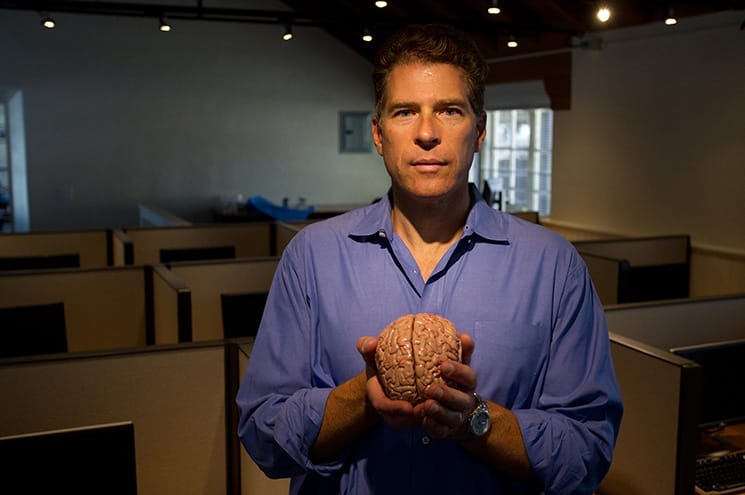
Paul Zak, a neuroeconomist at Claremont Graduate University, has spent years studying the neurochemical effects of storytelling. His research focuses on oxytocin - often called the “love hormone” or “trust molecule” - which plays a crucial role in human bonding and social connection.
Zak’s lab discovered that compelling stories trigger the brain to release oxytocin. Not metaphorically. Measurably. They drew blood from subjects before and after exposure to emotional narratives and found significant increases in oxytocin levels.
Here’s where it gets interesting for anyone who wants to persuade, inspire, or connect with other humans: Zak found that when stories caused oxytocin release, people became more generous, more trusting, and more likely to take action. In one experiment, participants who watched emotionally engaging stories donated 57% more money to charity than a control group. The oxytocin made them care.
Think about what this means. When you tell a story that follows the pattern humans are wired to recognize - the Hero’s Journey pattern - you’re not just communicating information. You’re triggering a neurochemical response that makes your audience more empathetic, more trusting, and more likely to act.
This is why you cry at movies about fictional characters. This is why you remember the plot of a film you saw twenty years ago but can’t remember what you read in an email yesterday. This is why stories have been humanity’s primary tool for transmitting knowledge, values, and culture since before we had writing.
The brain also releases dopamine during compelling narratives - particularly during moments of rising tension and anticipation. Dopamine is associated with motivation, attention, and reward. It’s what keeps you watching “just one more episode” at 2 AM. The Hero’s Journey structure, with its systematic building of tension through trials and obstacles toward a climax, is essentially a dopamine-optimization machine.
There’s also the phenomenon psychologists call “narrative transport” - the experience of being so absorbed in a story that you lose awareness of your surroundings. Research shows that when we’re transported into a narrative, we process the events as if they’re happening to us. The brain’s distinction between “real” experiences and “story” experiences blurs. We feel the hero’s fear, triumph, and transformation because, neurologically, we’re experiencing it with them.
This is why the Hero’s Journey works. Not because it’s a clever template that some writer invented. Because it maps to the way human brains process experience, growth, and meaning. Because evolution spent fifty thousand years optimizing our neural architecture to respond to exactly this pattern.
When Campbell found the same story in every culture, he was finding evidence of something biological. The monomyth isn’t a cultural artifact. It’s a neurological one.
The Twelve Stages
Campbell’s original formulation included seventeen stages, grouped into three main phases: Departure, Initiation, and Return. In 1985, a Hollywood development executive named Christopher Vogler wrote a seven-page memo that would change the film industry - a practical adaptation of Campbell’s work called “A practical guide to the hero with a thousand faces”.
Vogler’s memo, later expanded into the book “The writer’s journey,” distilled Campbell’s seventeen stages into twelve more practical ones. This is the version that Hollywood uses. It’s the version I’ll walk through here, because it’s the most useful for anyone trying to apply this pattern to their own work.
But first, a warning: this isn’t a rigid formula. Not every story includes all twelve stages. Not every story presents them in exactly this order. The Hero’s Journey is a pattern, not a prescription. The best storytellers use it as a foundation and then play with it, subvert it, combine stages, or skip them entirely when the story demands it.
Think of it as a map of the territory, not a set of turn-by-turn directions.
Act One: departure
Stage 1: the ordinary world
Every journey begins somewhere, and the Hero’s Journey begins in the ordinary world - the hero’s normal life before the adventure starts.
This stage does crucial work. It establishes who the hero is before they’re transformed. It shows us their daily life, their relationships, their limitations. It makes the hero relatable - “this person is like me, living a normal life” - so that when extraordinary things start happening, we’re invested in the outcome.
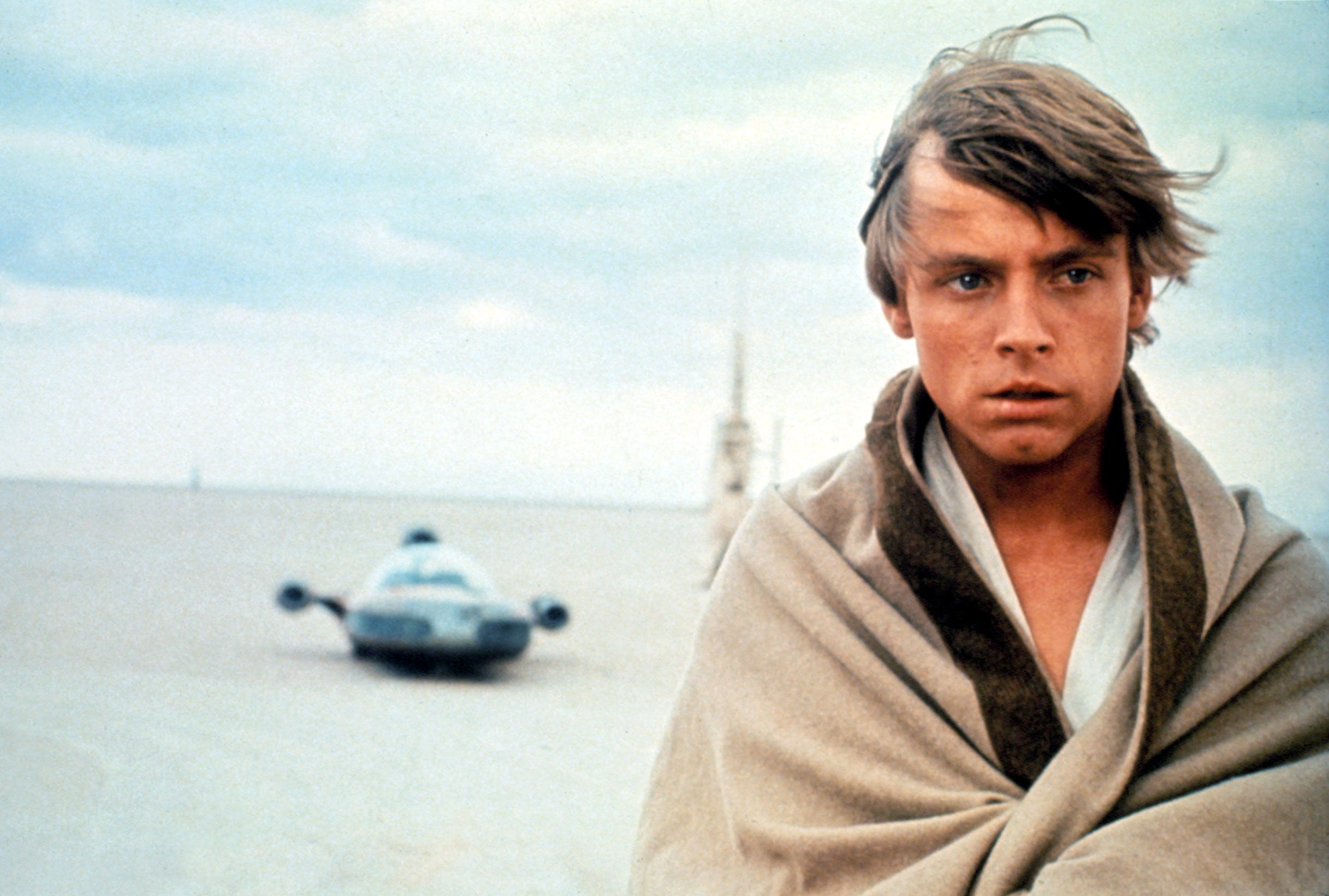
Luke Skywalker is a farm boy on a backwater planet, staring at the twin suns and dreaming of something more. Neo is a programmer in a cubicle, sensing that something is wrong with the world but unable to articulate what. Frodo is a hobbit in the Shire, comfortable and provincial, with no ambitions beyond his next meal.
The ordinary world shows us what the hero stands to lose. It gives the adventure stakes. Without it, we don’t care what happens next.
For founders, the ordinary world is your life before the startup. The job you had. The problem you saw that others didn’t. The restlessness that told you there had to be something more.
Stage 2: the call to adventure
Something happens that disrupts the ordinary world. An invitation arrives. A challenge presents itself. A discovery changes everything.
This is the moment when the story actually begins - when the hero is confronted with the possibility of a different life. The call can be external (a message, a challenge, a threat) or internal (a realization, a desire, a vision).
Luke receives a holographic message from a princess in distress. Neo is told to follow the white rabbit. Frodo inherits a ring that turns out to be far more than a family heirloom.
The call to adventure represents the story asking its central question: will this person accept the challenge? Will they step out of their ordinary world and into the unknown?
For founders, this is the moment of insight. The idea that won’t leave you alone. The problem you realize you might be able to solve. The opportunity that seems too big to ignore.
Stage 3: refusal of the call
Almost always, the hero hesitates.
This stage might seem counterintuitive - why would we want our hero to refuse the adventure? But the refusal serves an important purpose. It shows us that the journey is genuinely difficult, genuinely risky. It shows us that the hero is human, with fears and doubts and obligations that make sense.
A hero who leaps into adventure without hesitation isn’t relatable. We don’t trust their judgment. We don’t believe in their eventual success because we never saw them wrestle with the decision.
Luke says he can’t leave - he has to help with the harvest, he has obligations to his uncle. Neo runs from the agents at first, unwilling to believe what Morpheus is telling him. Frodo tries to give the ring away to Gandalf.
The refusal also raises the stakes. It tells us that whatever force eventually overcomes the hero’s hesitation must be powerful indeed.
For founders, this is all the reasons you almost didn’t start. The safe path you could have taken. The doubts that still wake you up at 3 AM. Every successful founder I know can tell you about the moment they almost chose differently.
Stage 4: meeting the mentor
The hero encounters a guide - someone who provides wisdom, training, tools, or simply encouragement. The mentor has been on their own journey and has knowledge the hero needs.
Crucially, the mentor doesn’t complete the journey for the hero. They enable the hero to complete it themselves. The mentor provides what’s needed and then steps back.
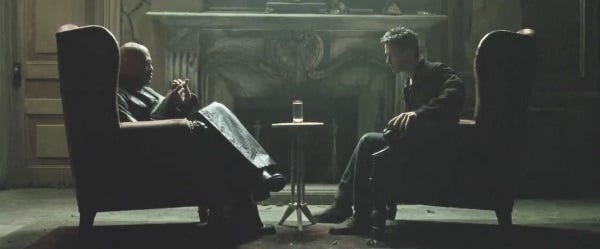
Obi-Wan Kenobi gives Luke his father’s lightsaber and teaches him about the Force. Morpheus shows Neo the truth about the Matrix and trains him to operate within it. Gandalf provides Frodo with guidance and protection, but he can’t carry the ring.
The mentor archetype is powerful because it represents the transmission of knowledge across generations - the way wisdom passes from those who’ve been through the fire to those who are about to face it.
For founders, mentors come in many forms. The advisor who believed in you before you believed in yourself. The book that changed your thinking. The conversation that gave you permission to try. For me, one of those mentors was Kelly Johnson - not in person, but through his writing and the Skunk Works principles I’ve written about before.
Stage 5: crossing the threshold
The hero commits. They leave the ordinary world behind and enter the special world - the realm of adventure, challenge, and transformation.
This is the point of no return. Once the threshold is crossed, going back to the old life becomes impossible. The hero has chosen their path.
Luke leaves Tatooine after his family is killed - there’s nothing left to return to. Neo takes the red pill. Frodo leaves the Shire knowing he may never come back.
The threshold crossing is often marked by a confrontation with a “threshold guardian” - some obstacle or challenge that tests whether the hero is truly ready to enter the special world. Only those who are committed can pass.
For founders, crossing the threshold is quitting your job. Taking the first investment. Shipping the first version of the product. Making the commitment that transforms “interesting idea” into “company”.
Act Two: initiation
Stage 6: tests, allies, and enemies
The hero enters the special world and must learn its rules. They face challenges, build a team, and discover who can be trusted.
This stage is often where the bulk of the story happens. The hero is tested repeatedly, gaining skills and allies while encountering obstacles and enemies. Each test prepares them for the greater challenges ahead.
Luke learns to use the Force, meets Han Solo and Chewbacca, navigates the politics of the Rebellion. Neo trains in the construct, meets the crew of the Nebuchadnezzar, learns to see the Matrix for what it is. Frodo journeys through Middle-earth, gathering the Fellowship, facing dangers at every turn.
For founders, this is the startup grind. Building the team. Landing early customers. Learning the market. Discovering which competitors will try to destroy you and which partners will help you succeed. Each project harder than the last - by design.
Stage 7: approach to the inmost cave
The hero prepares for the central ordeal. Tension builds. The stakes become clearer. Everything so far has been preparation for what comes next.
This stage often involves reconnaissance, planning, or confronting fears that will be relevant in the ordeal. The hero may pause to reflect on how far they’ve come and steel themselves for what lies ahead.
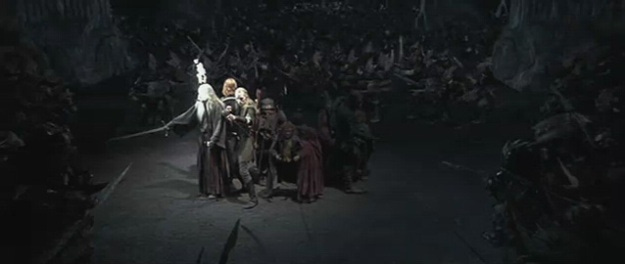
The Rebels analyze the Death Star plans and prepare for the assault. Neo goes to see the Oracle, confronting questions about his own identity and destiny. The Fellowship approaches the Mines of Moria.
For founders, this is the approach to the make-or-break moment. Preparing for the major funding round. Getting ready for the product launch that will determine whether you survive. The deep breath before the plunge.
Stage 8: the ordeal
The central crisis. The hero faces their greatest fear, confronts death (literal or metaphorical), and undergoes a transformation.
This is the heart of the Hero’s Journey - the moment of maximum danger and maximum growth. The hero must draw on everything they’ve learned in order to survive. They may fail before they succeed. They may have to sacrifice something precious.
Luke turns off his targeting computer and trusts the Force in the Death Star trench run. Neo faces Agent Smith and is killed - then rises again as The One. Frodo reaches the Crack of Doom and finds himself unable to destroy the ring.
The ordeal often involves a symbolic death and rebirth. The hero who emerges is not the same person who went in. They have been transformed by the experience.
For founders, the ordeal is the moment everything almost fell apart. The near-death experience of the company. The crisis that forced you to become something more than you were. Every successful startup has at least one of these stories.
Stage 9: the reward
The hero seizes what they came for. The ordeal has been survived, and there’s a moment of celebration, relief, or recognition.
But this isn’t the end. The reward stage marks a turning point, not a conclusion. The hero has achieved something significant, but the journey isn’t over. There are still consequences to face, still a return journey to complete.
The Death Star is destroyed. Neo has discovered his power. The ring is destroyed (though not by Frodo’s choice).
For founders, the reward might be the funding round closing. The product working. The market responding. It feels like victory, and it is - but you know it’s not the end of the story.
Act Three: return
Stage 10: the road back
The journey home begins, but it’s not a simple reversal. New challenges emerge. The consequences of the hero’s actions in the special world create complications.
Often this stage involves chase sequences, ticking clocks, or forces pursuing the hero. The special world doesn’t want to let them go.
For founders, the road back is everything that comes after product-market fit. Scaling. Hiring. Competition responding. The new challenges that success creates.
Stage 11: the resurrection
A final test - often the climactic confrontation of the entire story. Everything the hero has learned is tested. They must prove that their transformation is real and permanent.
This is frequently the emotional climax of the narrative, even if earlier sequences had more action. The hero faces a choice that reveals their true character.
For founders, resurrection might be the acquisition offer you turn down because it’s not right. The moment you prove that your values survive success. The test that shows whether you’ve really changed or just been lucky.
Stage 12: return with the elixir
The hero returns to the ordinary world, transformed, carrying something of value to share with others.
The elixir might be literal (a treasure, a cure, a person rescued) or metaphorical (knowledge, wisdom, a new capability). The point is that the journey has meaning beyond the individual hero. What they’ve gained benefits their community.
For founders, the elixir is impact. It’s the jobs you created, the problems you solved, the knowledge you can now share with others. It’s why this newsletter exists - to pass on what the journey has taught me.
The founder’s journey
Every pitch deck is a story. Every successful company is a narrative. Every investor who writes a check is, in some sense, buying into a Hero’s Journey.
But here’s where I need to complicate things a bit.
When I first learned about the Hero’s Journey twenty-five years ago, I was tempted to treat it as a template - plug in the stages, and your story will work. That’s not quite right. Storytelling is more art than science, and the Hero’s Journey is one tool among many. It’s a powerful tool, maybe the most powerful one, but it’s not a formula that guarantees success.
What I’ve learned over years of pitching, presenting, and persuading is this: the Hero’s Journey is most useful as a diagnostic. When a story isn’t working, mapping it against the Hero’s Journey often reveals why. When a pitch falls flat, it’s frequently because one of these stages is missing or underdeveloped.
Missing the ordinary world? Your audience doesn’t understand what’s at stake. Missing the refusal? Your journey sounds too easy to be believable. Missing the ordeal? There’s no emotional climax, no transformation that feels earned.
The pattern is also useful for understanding who the hero actually is in your story. This is where many founders go wrong.
When you’re pitching your company, you might think you’re the hero. You’re not - or at least, not always. In the story of your company, yes, you’re the hero. You received the call, crossed the threshold, faced the ordeals. That story can be powerful, and investors do want to understand your journey.
But in the story of your product, the customer is the hero. They have an ordinary world (life before your product). They have a problem (the call to adventure). Your product is the mentor - the guide that enables their transformation. Your company exists to help them complete their journey.
The best pitches weave both stories together. The founder’s journey establishes credibility and emotional connection. The customer’s journey shows why the product matters and what transformation it enables.
This is why storytelling matters in business, but it’s also why there’s no simple formula. The art is in knowing which story to tell, when, and how to make your audience care about the outcome.
Why AI can’t do this (and how we’re trying anyway)
Here’s where my obsession with the Hero’s Journey intersects with what we’re building at Omea.
The dream of interactive storytelling - narratives that respond to player choices while maintaining coherence and emotional power - has been around for decades. Games have attempted it with branching paths, where writers script every possible route. Choose-your-own-adventure books pioneered a version of it on paper.

But true interactive narrative - where the player has genuine freedom and the story adapts meaningfully to their choices - has remained elusive. And there’s a fundamental technical reason why.
Most large language models today are built on a particular architecture. They predict the next token based on what came before. They’re very good at this - good enough to write convincing paragraphs, good enough to pass professional exams, good enough to fool people into thinking they’re conversing with another human.
But this “next token prediction” approach has a limitation that becomes critical for long-form narrative: the model is always looking forward, always predicting what comes next. It doesn’t naturally maintain the kind of structural awareness that storytelling requires.
A good story isn’t just a sequence of plausible next sentences. It’s a structure. It has setup and payoff. It plants information early that becomes relevant later. It tracks character arcs and thematic threads across thousands of words. It knows where it’s going, even as it figures out how to get there.
When you’re running a pen-and-paper RPG as a Game Master - which is where I learned storytelling - you’re constantly holding the whole structure in your head. A player does something unexpected, and you adapt. But you’re adapting within a framework. You know where the story needs to go emotionally, even if the specific path is improvised.
This is incredibly hard for AI to do.
Standard approaches to AI storytelling tend to produce one of two failure modes. Either the output is rigidly scripted (branching paths that feel like you’re on rails) or it’s genuinely responsive but loses coherence over time (the story meanders, forgets what happened earlier, fails to build to a satisfying conclusion).
At Omea, we’re trying something different. Our approach - what we call the Narrative Intelligence Architecture - is designed to maintain awareness of the whole context, not just predict the next moment. Think less “what word comes next” and more “given everything that’s happened, what does this story need right now”.
The Hero’s Journey is fundamental to how this works. Not as a rigid template that every story must follow, but as a map of emotional territory. The system understands where the player is in their journey - are they still in the ordinary world? Have they crossed the threshold? Are they approaching their ordeal? - and it shapes the narrative accordingly.
Player freedom is essential. In Purple Blades, our hard sci-fi heist adventure, players can approach challenges however they want. Try to sneak into the planetary complex. Fail, and talk your way out. Or brute force it. Or find a creative solution the writers never anticipated. The system has to make all of these work while maintaining narrative coherence.
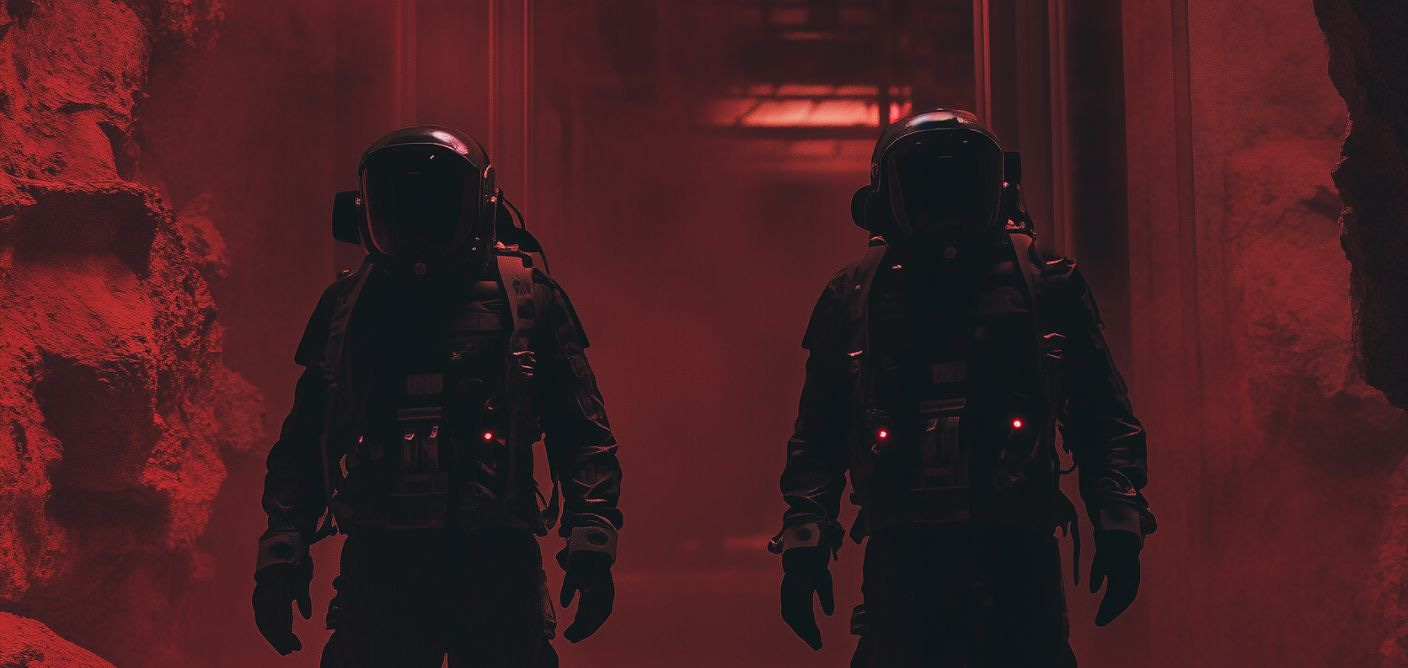
This is what I mean when I say each playthrough is unique, yet each follows a story structure that human brains recognize and respond to. The content differs wildly based on player choices. The emotional architecture remains.
Twenty-five years ago, I was trying to do this manually at a gaming table. Now we’re trying to do it with AI. The fundamental challenge is the same: how do you give people genuine agency while still delivering a story that satisfies the patterns their brains expect?
I don’t think we’ve fully solved this yet. I’m not sure anyone has. But I know the Hero’s Journey is part of the answer, because it’s been part of the answer for fifty thousand years.
My journey
I’ve been talking about the Hero’s Journey in abstract, so let me make it concrete. Let me map my own story - the one I’m living right now, the one that led to this newsletter and everything I’m building.
Ordinary world
Poland. Engineering. Building things that worked. A career in technology that was comfortable and successful by most measures, but accompanied by a restlessness I couldn’t fully explain. The sense that I was capable of more, that there was something bigger waiting, that the interesting problems were elsewhere.
Call to adventure
AI. The realization that machines could generate not just text but narratives. The insight that current approaches - chatbots, simple generators, branching scripts - weren’t good enough to create stories that actually moved people. The question that wouldn’t leave me alone: what if we could do this right?
Refusal of the call
The lessons of ACR were still fresh. I knew what failure felt like - almost a decade of building in the wrong country, with the wrong co-founders, getting outcompeted on price by Chinese manufacturers who first matched our quality and then crushed us economically. The safe path was obvious: consulting, comfortable employment, stay in Europe where I knew the rules.
Why would I risk that again?
Meeting mentors
The mentor in stories doesn’t fight the dragon for you. They prepare you to fight it yourself. Obi-Wan doesn’t defeat Vader for Luke - he teaches Luke to wield the lightsaber.
I found mentors who understood this distinction.
Przemek Kuśmierek, who had walked the impossible-project path with Migam and could speak from experience. Artur Kurasiński, who believed in crazy ideas before the evidence existed. Michał Pena, who would become CTO at Omea - the wise technical voice who keeps me from building the wrong thing brilliantly.
And two advisors who embody what mentorship actually means: Harald Nuhn and Priyank Jain. Harald, a Stanford lecturer. Priyank, IBM’s global innovation lead. Both advisors at Omea. Neither has ever handed me an investor or solved a problem for me directly. That’s not what they do.
What they do is listen. I bring them pain points, problems, worries - the messy stuff you can’t put in a pitch deck. They ask questions. They push back. They help me see what I’m missing. When I needed investors, they didn’t bring one. They spent months helping me sharpen the product-market fit, stress-test the business plan, refine the pitch until it could stand on its own.
The mentor gives you tools and wisdom. You still have to swing the sword.
And Kelly Johnson, through his writing - a mentor from the past, proving that small teams could accomplish things that should be impossible.
Crossing the threshold
Starting Omea. Committing to the US market. Burning the boats. Making the decision that transformed “interesting idea” into “this is what I’m doing with my life”.
There was a specific moment, or rather a series of moments, when going back became impossible. When I had committed enough - money, time, reputation - that the only path was forward.
Tests, allies, enemies
Building the team. Fundraising in a market that didn’t know us. Technical challenges that seemed insurmountable until they weren’t. Learning Silicon Valley’s rules while refusing to abandon the Skunk Works principles that got us this far.
Each project harder than the last. Beyond Humanity taught me about hardware, crowdfunding, and community. Migam taught me about impact and accessibility. Omea is teaching me about narrative AI and the limits of what small teams can accomplish.
The challenges keep escalating. That’s by design. Life’s too short to solve simple problems.
Approach to the inmost cave
The Bay Area trips. The conferences. The meetings with investors and partners. Standing in rooms with people whose companies are worth billions, feeling the impostor syndrome scream that I don’t belong here, that some cosmic glitch put me in a party I wasn’t invited to.
Preparing for the conversations that will determine whether Omea becomes what I believe it can become.
The ordeal
I’m in it. Right now. The company isn’t dead, but it also hasn’t achieved escape velocity. The technology works, but we haven’t proven the market. The vision is clear, but the path to get there still has moments of fog.
This is the part of the journey where the hero faces their greatest fear. Mine isn’t failure, exactly - I’ve failed before and survived. It’s the fear that I might not be good enough, that all the principles and the hard work and the belief might not be sufficient, that the story ends in an unsatisfying middle.
But here’s something I didn’t expect: writing this helps. Being open with you - whoever you are, reading this - makes the burden lighter. The fog clears a little when I put words to it. Maybe that’s why heroes in stories always find companions in the dark parts. Not to fight for them, but to witness. To make the struggle feel less alone.
The reward
Some days I can see it. The product working. Users loving it. The model validated. The reward isn’t guaranteed - that’s not how the ordeal works - but I can feel what it would be like to seize it.
The road back, the resurrection, return with elixir
I don’t know how these chapters go yet. The story isn’t over.
But I know what I want the elixir to be. Not just a successful company, though that would be nice. The elixir I want to bring back is knowledge. Proof that small teams can still build important things. Principles that work. Lessons that might help someone else make the journey.
This newsletter is part of that return, started before the journey is complete. Because sometimes you don’t wait until you have all the answers. Sometimes you share what you’ve learned so far, even while you’re still learning.
The invitation
So here’s what I want you to take from all of this.
The Hero’s Journey isn’t a writing technique. It’s not a clever framework that consultants sell. It’s a map of human experience that’s been encoded in our neurobiology over tens of thousands of years.
When you use it, you’re not manipulating your audience. You’re speaking their native language - a language older than any spoken tongue, a language written in oxytocin and dopamine and the synchronized firing of neurons.
But using this knowledge requires more than just memorizing twelve stages.
For your pitch: don’t just present information. Tell a story. Establish the ordinary world - what’s the status quo that’s broken? Show the call - what opportunity exists? Let your audience feel the ordeal - what challenges have you faced? Make the reward tangible - what have you achieved? And show them the elixir - what transformation does your product enable?
But don’t force it. Storytelling is essential for persuasion. The Hero’s Journey is one powerful structure among several. Use it when it fits. Adapt it when it doesn’t.
For your product: what journey are you taking your users on? Where’s their ordinary world? What’s the transformation you enable? Does using your product feel like a story - with progress, challenges, and rewards - or does it feel like a transaction?
The products people love aren’t just useful. They make their users feel like heroes.
For your own sanity: you’re on a Hero’s Journey right now. Whether you recognize it or not.
If you’re in the refusal stage - hearing the call but finding reasons not to answer - know that the refusal is normal. Every hero hesitates. The question is what force will eventually push you across the threshold.
If you’re in the tests stage - facing challenge after challenge, building your team, learning the rules of a new world - know that this is preparation. Each test teaches you something you’ll need for the ordeal.
If you’re in the ordeal itself - facing the moment of maximum danger, wondering if you’ll survive - know that this is where transformation happens. The hero who emerges won’t be the same person who went in. That’s the point.
And if you’ve reached your reward and are on the road back, remember that the elixir isn’t just for you. What you’ve learned has value for others. Share it.

The Hero’s Journey has been with us since before writing. Since before agriculture. Since humans first gathered around fires and told each other stories about the brave one who left, faced danger, and returned transformed.
It’s in every mythology. It’s in every religion. It’s in every blockbuster movie and bestselling novel and pitch that raised a billion dollars.
It’s carved into your brain, waiting to be activated by the right story told in the right way.
Twenty-five years ago, I discovered this pattern while trying to become a better Game Master. I thought I was learning a writing technique. I was actually learning how human minds work - and that knowledge has shaped everything I’ve built since.
Now I’m trying to teach it to an AI. The jury’s still out on whether that’s possible. But I know that whatever we build will be measured against fifty thousand years of storytelling evolution. The bar isn’t other apps. The bar is the pattern that human brains expect, demand, and respond to at the deepest neurological level.
No pressure.
Less talking, more building. See you next week.
Max
PS. If you want to go deeper on this:
Books:
“The hero with a thousand faces” by Joseph Campbell - the original. Dense but essential.
“The writer’s journey” by Christopher Vogler - the practical Hollywood adaptation.
“Story” by Robert McKee - for structure obsessives and anyone who wants to understand screenwriting.
Research:
Paul Zak’s work on oxytocin and storytelling - his TED talk is a good starting point.
Uri Hasson’s research on neural coupling - shows what happens in the brain during narrative.
Gratitude: to the Game Masters who taught me storytelling by running unforgettable campaigns. To the players who showed me what works and what doesn’t by voting with their attention. To Campbell, who didn’t invent the pattern but found it hiding in plain sight across all of human culture.
PS2. Next week: tools of the trade. What’s actually on my desk and in my terminal. Hardware, software, the setup that makes all this building possible. Something lighter after two beasts in a row. We’ll see if I can keep it under 3000 words.
(I probably can’t)